Home » Archives

Content tagged with: windows phone

[8 May 2013 | No Comment | ]

Want to develop your apps for mobile devices? You’ll need to install the right tools to get the job done. Visual Studio 2012 offers a powerful development environment to build great apps quickly. There are valuable 3rd party tools that you will need too.

[3 Apr 2013 | No Comment | ]

Standing out in the Windows Phone marketplace is getting more and more difficult, but still achievable with high quality apps. The OS delivers a different look and feel compared to other platforms and as a results users expect, download and buy apps that are tailored for this platform.

[23 Jan 2013 | No Comment | ]

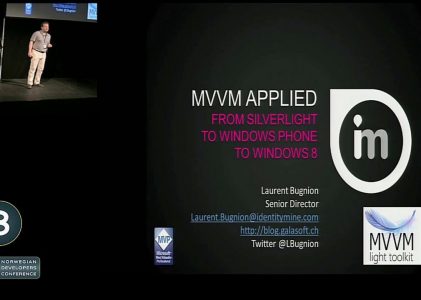
The Model-View-ViewModel pattern is a common denominator between applications using XAML to create the user interface. First applied in WPF, it was then easily ported to Silverlight and Windows Phone development. With WinRT and the Metro-style applications, XAML is now a first-class citizen for native Windows 8 development.

[27 Aug 2012 | No Comment | ]

Get a deep dive on all options you have to do background processing in Windows Phone 7 Mango. With the release of Windows Phone 7 Mango, a lot of extra features were added to the platform. One of the most anticipated ones is the possibility to create code that runs in the background. This way, applications can perform tasks such as polling a service, updating a live tile and much more. It’s also possible to create audio agents that allow you to build media players that can play audio without …

[8 May 2012 | No Comment | ]

With Microsoft’s Silverlight technology it’s possible to rapidly design and develop Apps based on the .NET framework for the all new Windows Phone. Based on practical experience in architecting and developing some of the early showcase apps this code heavy talk will provide a real world deep dive into core software design concepts and patterns like Model-View-ViewModel (MVVM) and demo many topics involved in the application development process including databinding, navigation, tombstoning, databases, localization and unit tests.